P1
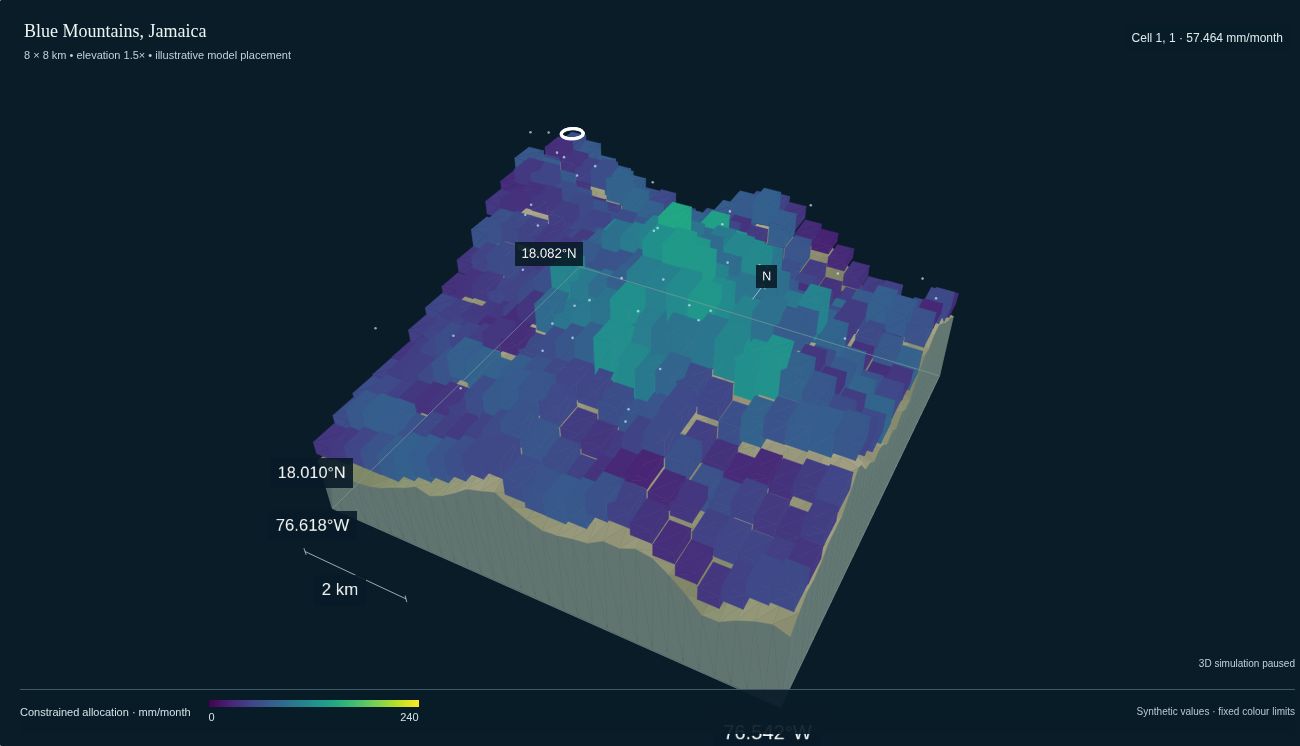
Allocate rainfall across smaller cells
Watch one coarse rainfall total split into smaller cells. Change the spatial pattern and the supplied total, then compare the maps.
ADRIAN DUNKLEY · EIGHT RESEARCH COMPANIONS
Eight interactive companions show the question, method and evidence limits behind Adrian Dunkley’s current research papers.
Explore the examples on mapped Jamaican terrain and Caribbean coastlines. Change an assumption, inspect a calculated value, or export a labelled figure. The fields are synthetic; each linked paper contains the study evidence and its limits.
P1
Watch one coarse rainfall total split into smaller cells. Change the spatial pattern and the supplied total, then compare the maps.
P2
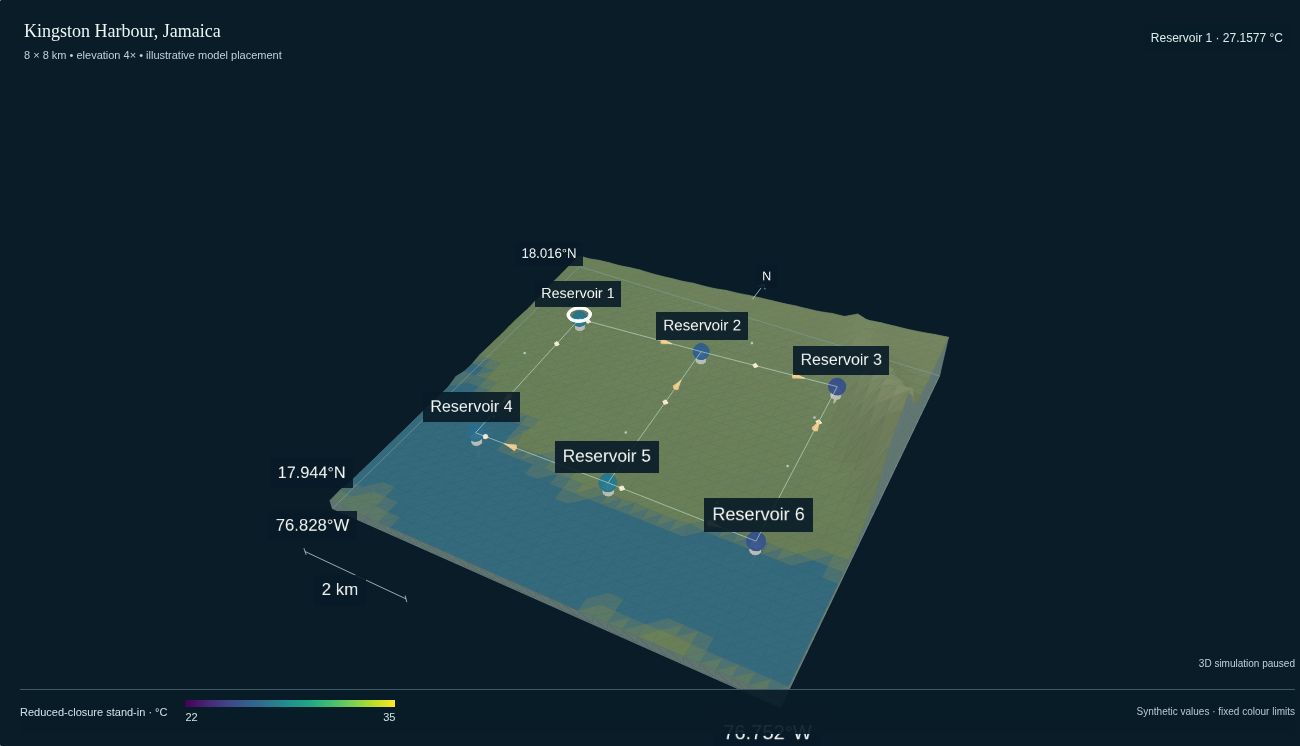
Watch temperature move through connected cells. Change heat input, exchange and observation noise, then compare the resulting fields.
P3
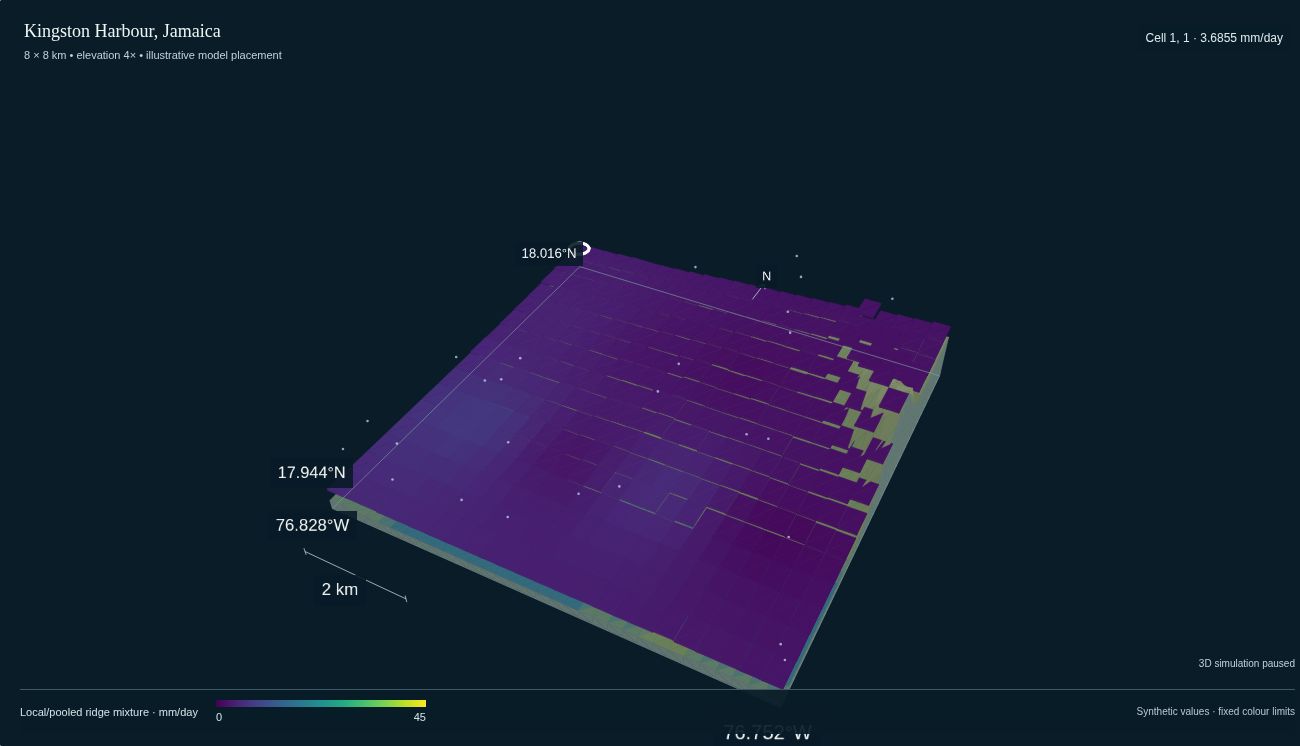
Watch a synthetic rain field while the model receives older information. Then change how much the model borrows from pooled records.
P4
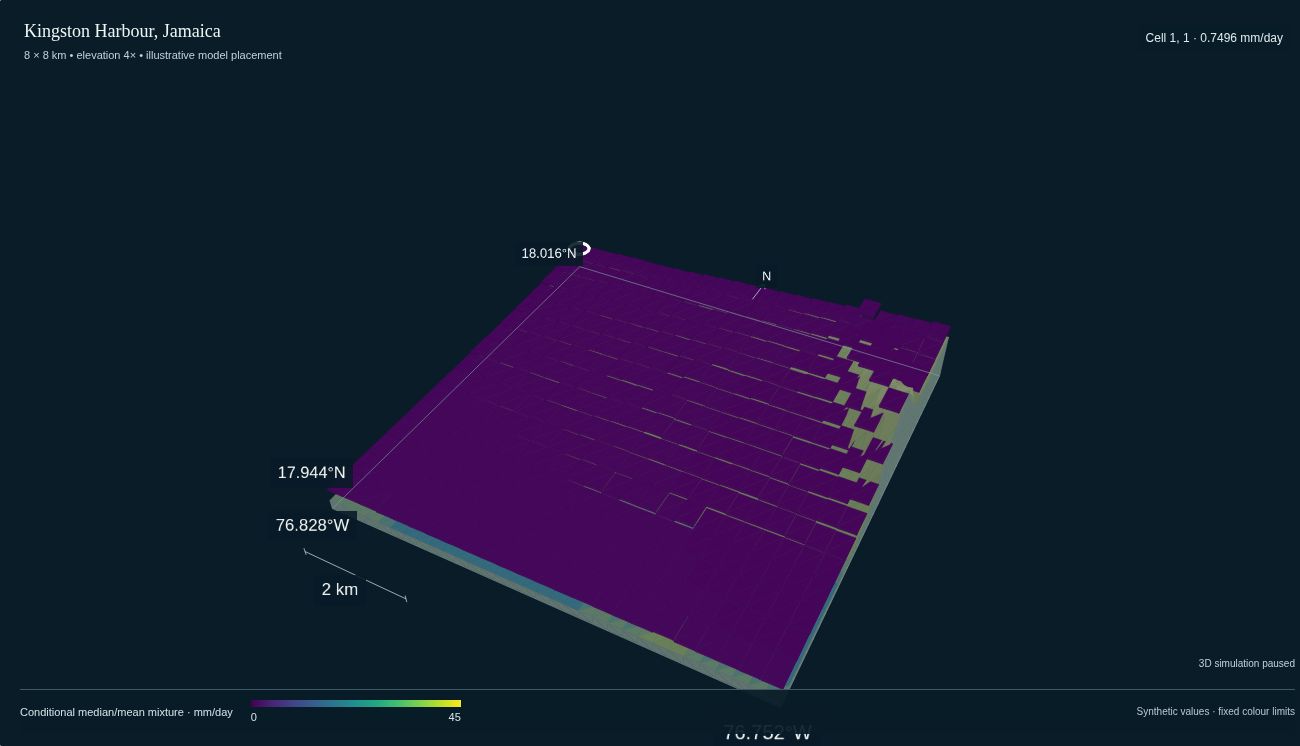
Watch a constructed rainfall sequence through two different forecast styles. Inspect ordinary days and heavy peaks separately.
P5
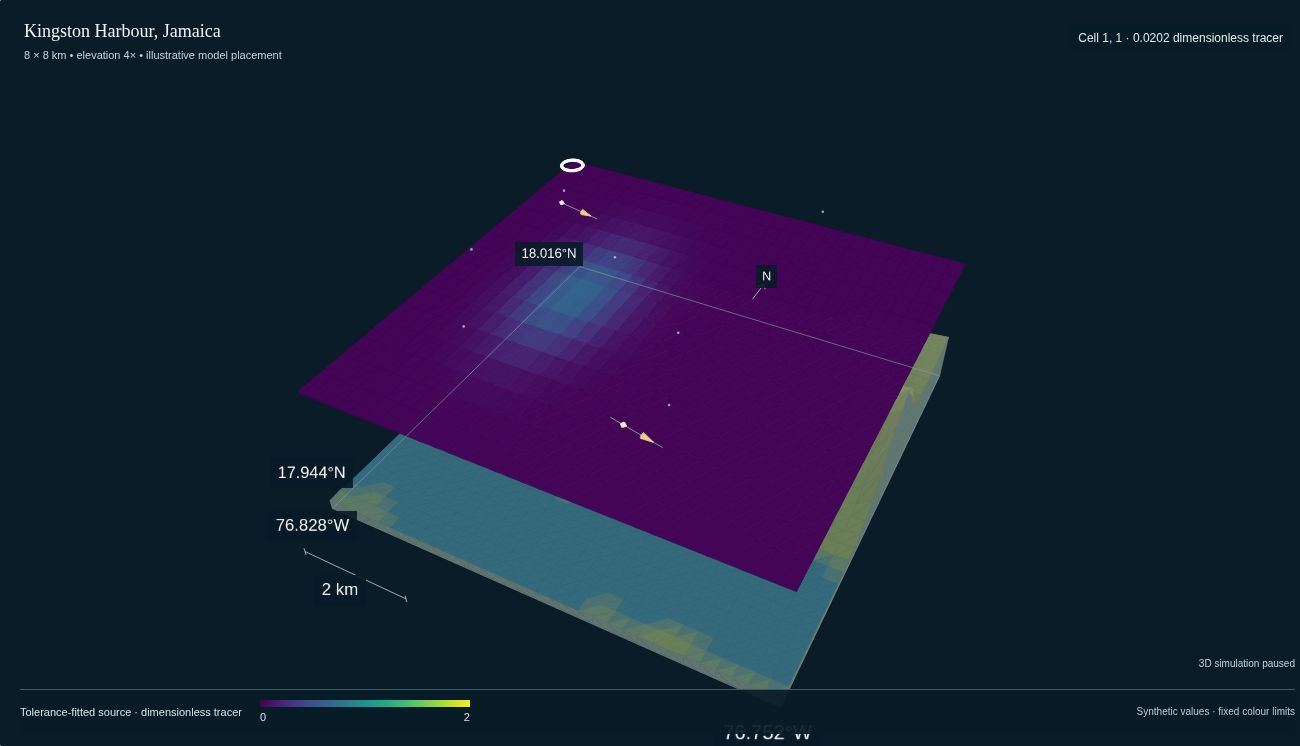
Watch a rain tracer move, grow and fade. Compare a balanced transfer record with the location and intensity of the rain itself.
P6
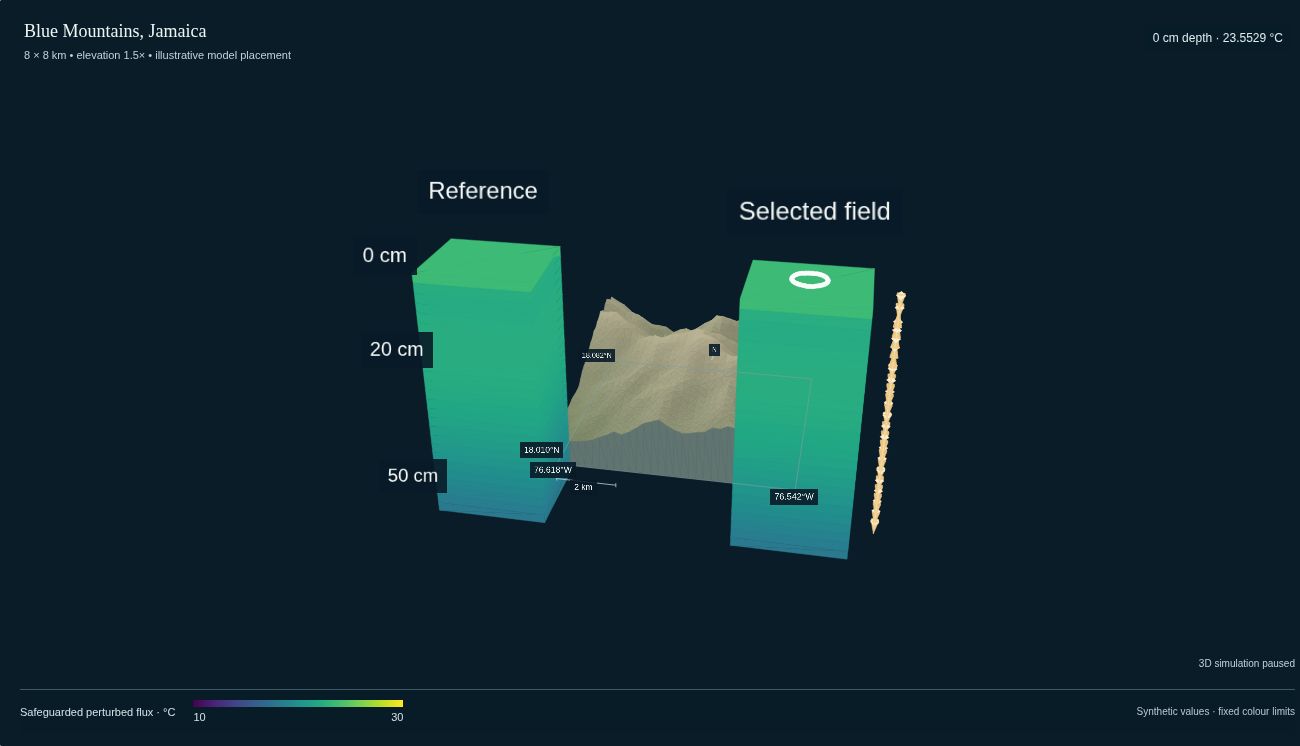
Watch heat move through a synthetic soil column. Compare the hidden temperature with estimates made using a perturbed flux and a local safeguard.
P7
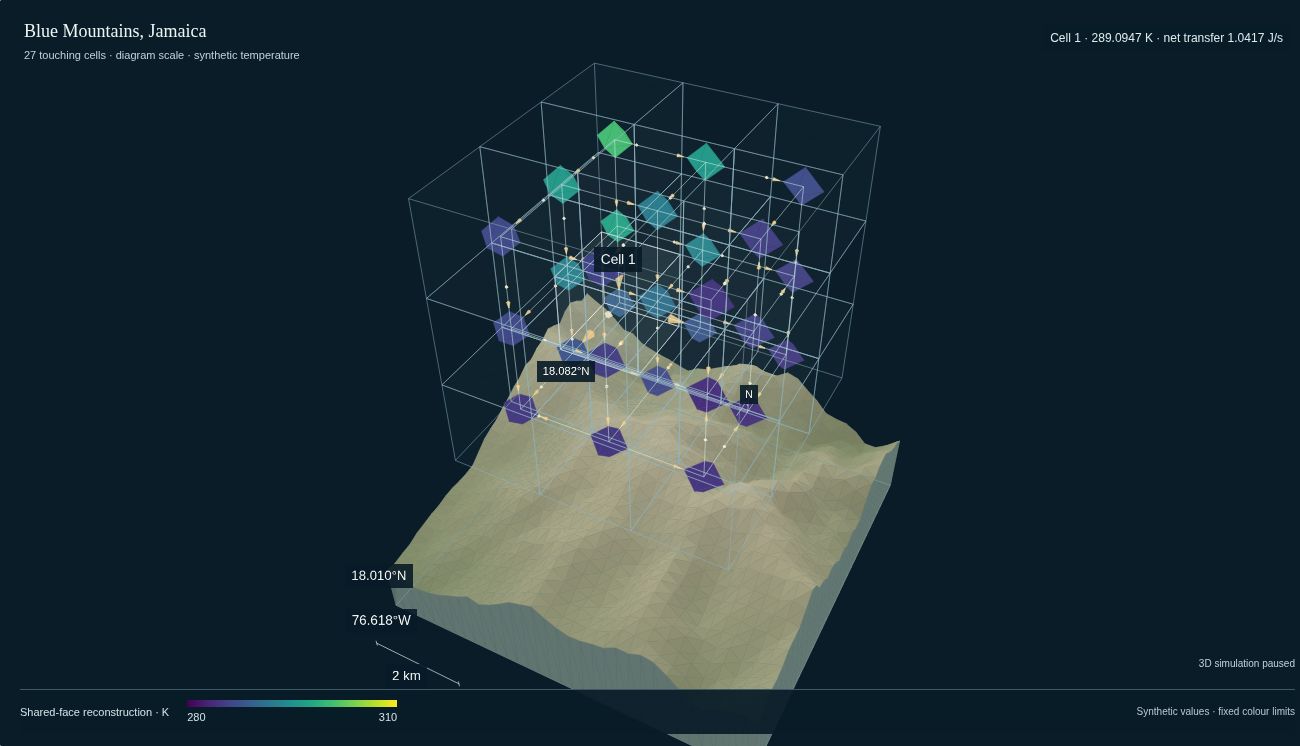
Follow heat across touching cells. Change the number of cubes, exchange strength or circulation, then inspect what conservation can and cannot tell you.
P8
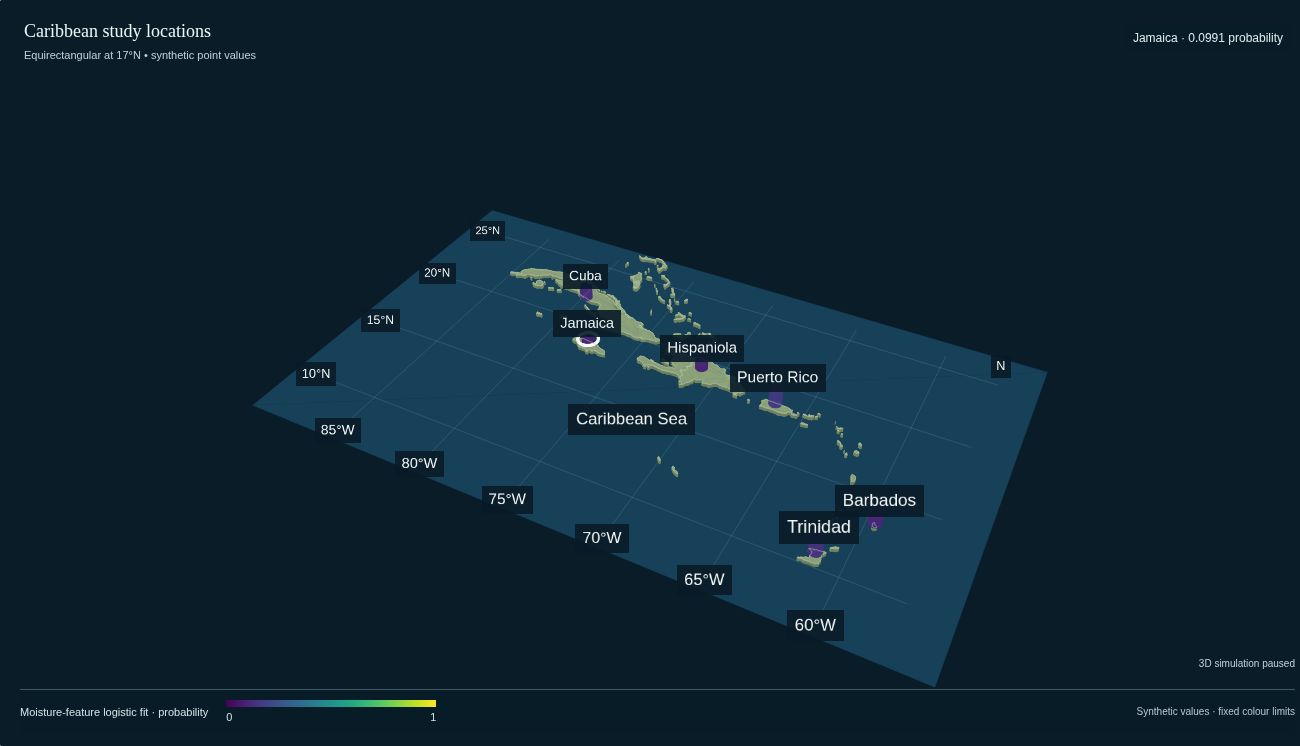
Watch a synthetic probability field built from moisture and rainfall history. Change the weights and calibration to see how the displayed risk changes.