This commentary proposes governance safeguards. It reports no new experiment, forecast score or operational deployment.
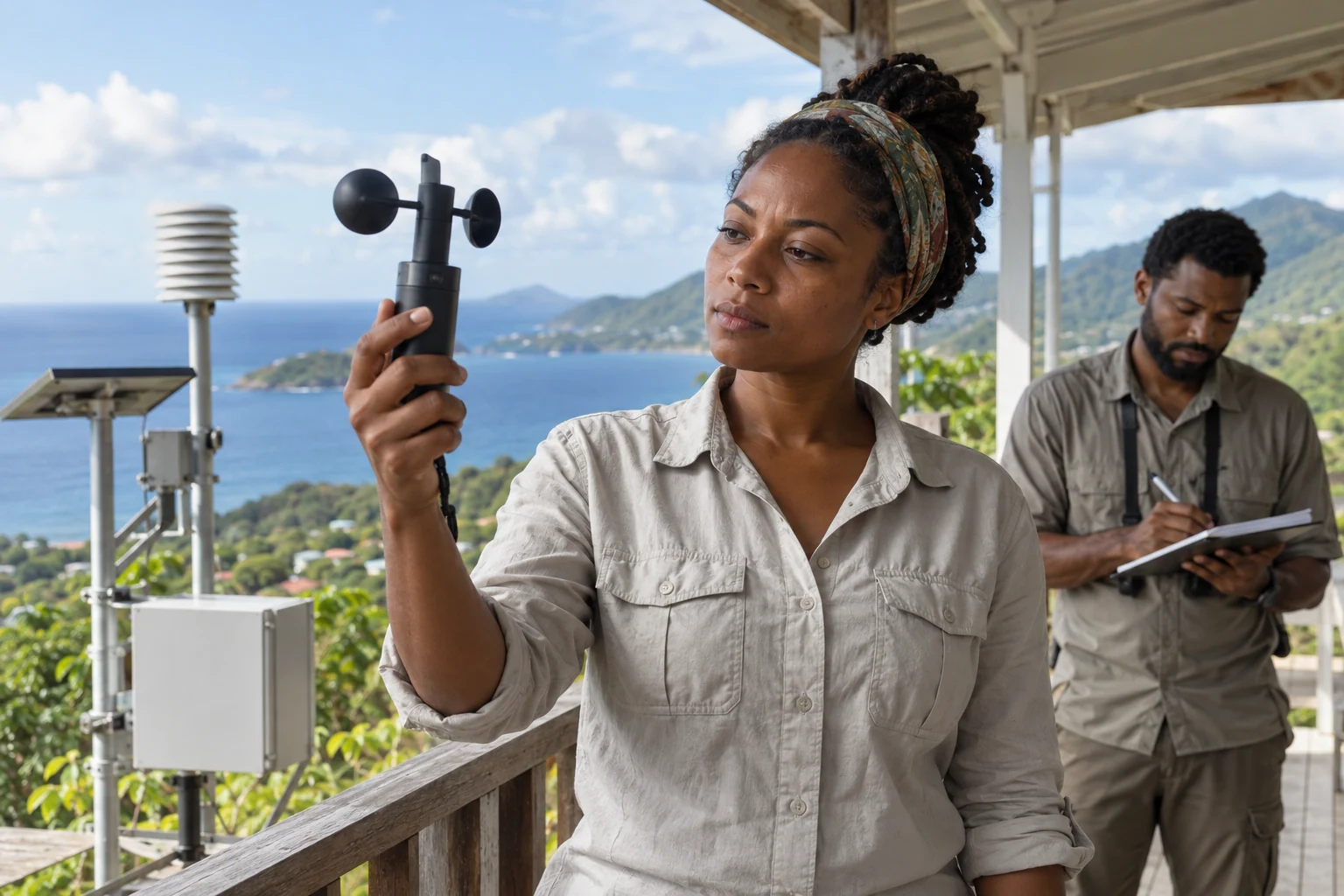
A coastal research team has decades of observations: rainfall measurements, shoreline surveys, flood histories and the knowledge of people who live beside the water. An AI service offers to organise everything, find patterns and prepare recommendations. The immediate benefit is clear. The harder question arrives later: can the team still explain, challenge and reproduce the work without that service?
I call the risk agentic colonization: a gradual transfer of agency as access becomes integration, and integration becomes influence over decisions. In climate science, this can reach beyond who stores the files. It can affect which questions get asked, which evidence becomes visible and whose judgment carries authority.
This is a risk framework, not a finding that every AI supplier exploits researchers. International collaboration and capable commercial tools can strengthen local science. The test is whether institutions retain the practical ability to direct, inspect and leave the systems they use.
Local observations carry local obligations
Climate data can look impersonal. A temperature reading is a number. Yet the dataset surrounding it may contain precise locations, household experiences, traditional ecological knowledge or information about vulnerable infrastructure. Its collection may depend on relationships built over many years.
Permission to analyse such material for one project should never be casually assumed to cover every possible secondary use. Before connecting an agent, document what it may read, where information travels, how long copies persist, whether material can be used for model training and who can authorise reuse. Check the actual contract and configuration rather than relying on a broad claim that a service is “secure.”
The CARE Principles for Indigenous Data Governance offer an important reference where Indigenous data are involved. They bring collective benefit, authority to control, responsibility and ethics into data practice. Their underlying lesson is that easier sharing does not by itself settle questions of rights or power. Institutions should work with the relevant communities' own governance requirements, rather than treating a general checklist as consent.
Protect the chain from observation to conclusion
An agent can retrieve papers, clean tables, write code and draft an interpretation in the same workflow. That convenience can conceal several distinct opportunities for error. A station record may be mislabelled. A unit conversion may be wrong. A missing value may be filled using an assumption that changes the result. A summary may describe a correlation as a cause.
For each important output, keep a provenance record: source dataset and version, acquisition date, transformations, code, model and tool versions where available, instructions, validation checks and named human reviewer. Save intermediate files. Record uncertainty and exclusions alongside the attractive final figure.
Exact repetition may be difficult when a proprietary service changes or produces variable responses. Preserve enough detail to test the substantive result through an independent route. If the conclusion cannot survive that check, it should not become a public recommendation merely because the report reads confidently.
Benchmark against the place being studied
A model that performs well on a broad benchmark may still miss the feature that matters locally. Consider a hypothetical flood application trained mainly on densely monitored landscapes. A small island watershed may have different terrain, incomplete gauges and drainage conditions that are poorly represented in the training material.
That example describes a failure to test for, not evidence that a particular product has failed. Researchers should define local evaluation cases before adoption: ordinary conditions, rare extremes, missing observations, instrument faults and situations where the system should refuse to make a strong claim.
Compare the AI-assisted approach with an appropriate existing method. Report where it helps and where it fails. Invite domain specialists and affected communities to challenge assumptions, while keeping scientific validation and community consultation distinct. Both matter; neither substitutes for the other.
Scientific visibility is also a question of power
The media dimension is easy to overlook. An agent may recommend which papers to read, then draft a press release, then suggest the headline most likely to attract attention. Each stage shapes what researchers and the public encounter.
If those stages repeatedly favour widely indexed institutions, English-language sources or dramatic claims, local evidence may receive less attention. That is a plausible pathway to unequal visibility, not proof of a coordinated campaign. Test it: examine whose work is cited, what languages were searched, which regional repositories were missed and whether uncertainty survived the summary.
UNESCO's Recommendation on the Ethics of Artificial Intelligence addresses concentration in cultural content and markets, linguistic diversity and algorithmic information curation. Those concerns belong in scientific communication too. A local account of coastal change should not lose its meaning simply because a system rewrites it into a more familiar global narrative.
Do not sell the institution its own memory
There is another dependency to examine. Researchers supply annotations, corrections, workflows and expert feedback. A platform becomes more useful within the institution, while the institution becomes less able to operate outside it. Eventually, access to accumulated working knowledge may depend on continuing subscription payments.
This is a commercial and governance risk. It does not establish that any particular provider unlawfully took data or owns the team's ideas. The practical questions are about licences, export formats, reuse rights, retained copies and the cost of changing suppliers. Research creativity includes the careful judgment behind a dataset, not only the paper published at the end.
A practical protocol for the next project
- Map access. List datasets, repositories and accounts the agent can reach. Start read-only and grant only the permissions needed.
- Name decision owners. Specify who approves data releases, methodological changes, publication claims and recommendations with real-world consequences.
- Keep an independent record. Store source material, code, assumptions and review notes in institution-controlled systems with appropriate access controls.
- Test local performance. Evaluate relevant conditions and failures, including when the system should express uncertainty or stop.
- Rehearse an exit. Export a completed project and reproduce its central result without the original agent. Document what breaks and fix that dependency.
The aim is stronger science with accountable tools. A research institution should be able to benefit from AI while retaining the authority to choose the question, inspect the evidence and reject the answer. In climate research, that authority is part of the public trust.
Provenance and scope
The agentic colonization framework is Adrian Dunkley’s analysis. The CARE and UNESCO documents provide governance guidance, not experimental proof of this framework. The examples and project protocol are proposed applications. The author approved publication of this article; AI assistance was used for editorial preparation and the clearly labelled illustration.
